|
Across the Hudson Valley following the first major snow fall of 2024, heavy rain followed a few days later. Between some areas having over one foot of snow followed by three or more inches or rain, everything is pretty wet right now! As weather permits for safe flying conditions, now is a great time to do some basic analysis of properties to see where water paths naturally follow the land contours. Here is a very short still image taken from 200ft AGL of Low Altitude Systems founder's property. It is easy to see from above where water runs through a row of brambles from the street down to the pond. Other areas where pond overflow is present are also easily spotted. During the late summer of 2023 following a storm which knocked down a large tree, neighbors were quick to act to remove additional at risk trees. While the majority of the water shown below is common, this will be the first year without natures large plant life storing some of the ground water.
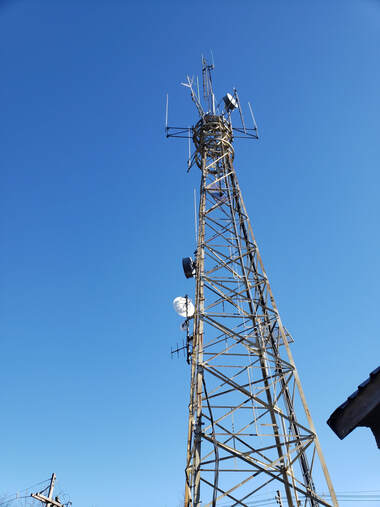
Please take this opportunity now to inspect your property with or without the help of aerial hydrology monitoring to plan ahead for the coming Spring time maintenance season, especially if you are considering making any landscape changes involving the removal or addition of trees, large plants or topsoil. As the harsh winter months finally descend across the Hudson Valley, communication site managers are scrambling to schedule crews for one last preventive maintenance or installation project before conditions become more complex and unsafe.
Sharing good quality inspection reports with high resolution video can not only help with preventive maintenance needs, but help offer benefits for the following reasons:
Preventive maintenance is by far the best use of a drone based preliminary tower inspection though. It is easy to use camera zoom functions from a safe distance to inspect certain components such as cable connections, tower mount amplifiers and safety lighting devices atop a tower, especially those higher than 100 foot AGL. It is also critical for the drone operator to be aware of what is being inspected on the tower from possible high power microwave links may interfere with certain drones communication links for the remote pilot (RPIC). Most importantly, a drone based tower inspection increases not only the overall safety for ground crews below from potential inspection tool mishaps, but can be accomplished much faster than a traditional climber. When factoring in the time needed for a climber to prepare rigging, safety devices, tool belt fitment and what is going up with the climber, a drone based inspection is a cost effective way to minimize liability for infrastructure and climbers who are often short in number. Do not hesitate to reach out to learn more about the services and schedule for Low Altitude Services. |